
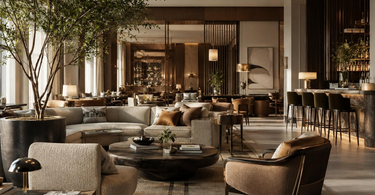
The hospitality industry continues to influence nearly every corner of luxury design. From boutique hotels and private clubs to luxury multifamily developments and branded residences, today's most successful projects are focused on creating experiences rather than simply designing spaces.
Guests, residents, and members expect environments that feel memorable, authentic, and highly curated. As a result, hospitality designers are pushing beyond traditional specifications and embracing a more residential, customized approach to interiors and furnishings.
Here are five trends continuing to shape the future of hospitality design.
1. Hospitality Spaces Are Becoming More Residential
One of the most significant shifts in hospitality design is the move away from traditional commercial aesthetics.
Guests increasingly seek spaces that feel warm, comfortable, and personal rather than formal or institutional. Hotel lobbies now resemble sophisticated living rooms. Club lounges feel like private residences. Amenity spaces are designed to encourage conversation, relaxation, and connection.
This residential influence extends beyond finishes and lighting. Furniture is becoming softer, more layered, and more comfortable while still meeting the performance demands of commercial environments.
The result is a hospitality experience that feels welcoming, familiar, and emotionally engaging.
2. Unique Experiences Matter More Than Brand Standards
While consistency remains important, many hospitality brands are embracing individuality.
Boutique hotels, independent hospitality groups, and luxury developments are increasingly looking for ways to differentiate themselves from competitors. Rather than creating spaces that could exist anywhere, designers are focused on creating environments that reflect a specific location, culture, or story.
Furniture, artwork, materials, and custom details all contribute to this sense of identity. The most successful projects create memorable experiences that guests associate with a particular property rather than a particular brand standard.
3. Customization Is Becoming a Competitive Advantage
Today's hospitality projects often require a level of customization that standard furniture collections cannot always provide.
Designers are increasingly looking for ways to tailor furnishings to the architecture, operational needs, and guest experience of a specific project.
Custom dimensions, specialized finishes, unique upholstery applications, and one-of-a-kind statement pieces allow hospitality environments to stand apart while supporting the overall design vision.
As hospitality brands compete to create distinctive guest experiences, customization has become a strategic design tool rather than a luxury.
4. The Line Between Hospitality and Residential Design Continues to Blur
Luxury multifamily developments, branded residences, private clubs, and boutique hotels are increasingly influencing one another, creating a new category of hospitality-inspired living.
Residents expect hotel-like amenities. Hotels seek the comfort of residential interiors. Private clubs incorporate wellness, coworking, dining, and social experiences under one roof.
This convergence is creating a new design language that values comfort, craftsmanship, flexibility, and authenticity.
Furniture is expected to perform in commercial settings while maintaining the warmth and character traditionally associated with luxury residential design.
5. Storytelling Is Driving Design Decisions
Perhaps the most important trend influencing hospitality today is storytelling.
Designers are creating environments that communicate a narrative through architecture, materials, furnishings, lighting, and art.
Whether inspired by local history, natural surroundings, cultural influences, or a brand's identity, every element contributes to a larger experience.
Furniture is no longer viewed as simply functional. It has become an important tool for shaping atmosphere, reinforcing identity, and creating memorable moments throughout a space.
The most successful hospitality projects understand that every detail contributes to the story being told.
Looking Ahead
As hospitality spaces become increasingly residential in feel, designers face a unique challenge: finding furniture that delivers the warmth and character of residential design while meeting the durability and performance requirements of commercial environments. This balance between residential craftsmanship and commercial performance is becoming one of the defining conversations in hospitality design today.
The manufacturers that will thrive in this evolving landscape are those that understand both design intent and execution—helping designers create spaces that are distinctive, memorable, and built to perform.
Bring Your Vision to Life with Black Label Home
At Black Label Home, we partner with designers, developers, and hospitality brands to create custom furnishings that balance craftsmanship, performance, and design intent. Whether furnishing a boutique hotel, private club, branded residence, or luxury amenity space, our focus remains the same: creating furniture that contributes to the story of the space and the experience of those who use it.
Have a hospitality, multifamily, or commercial project on the horizon? Let's start the conversation.
Contact Black Label Home to schedule a consultation:
- Email: info@blhcollection.com
- Phone: 323.585.2455
